Students' entire university life, in a single portal
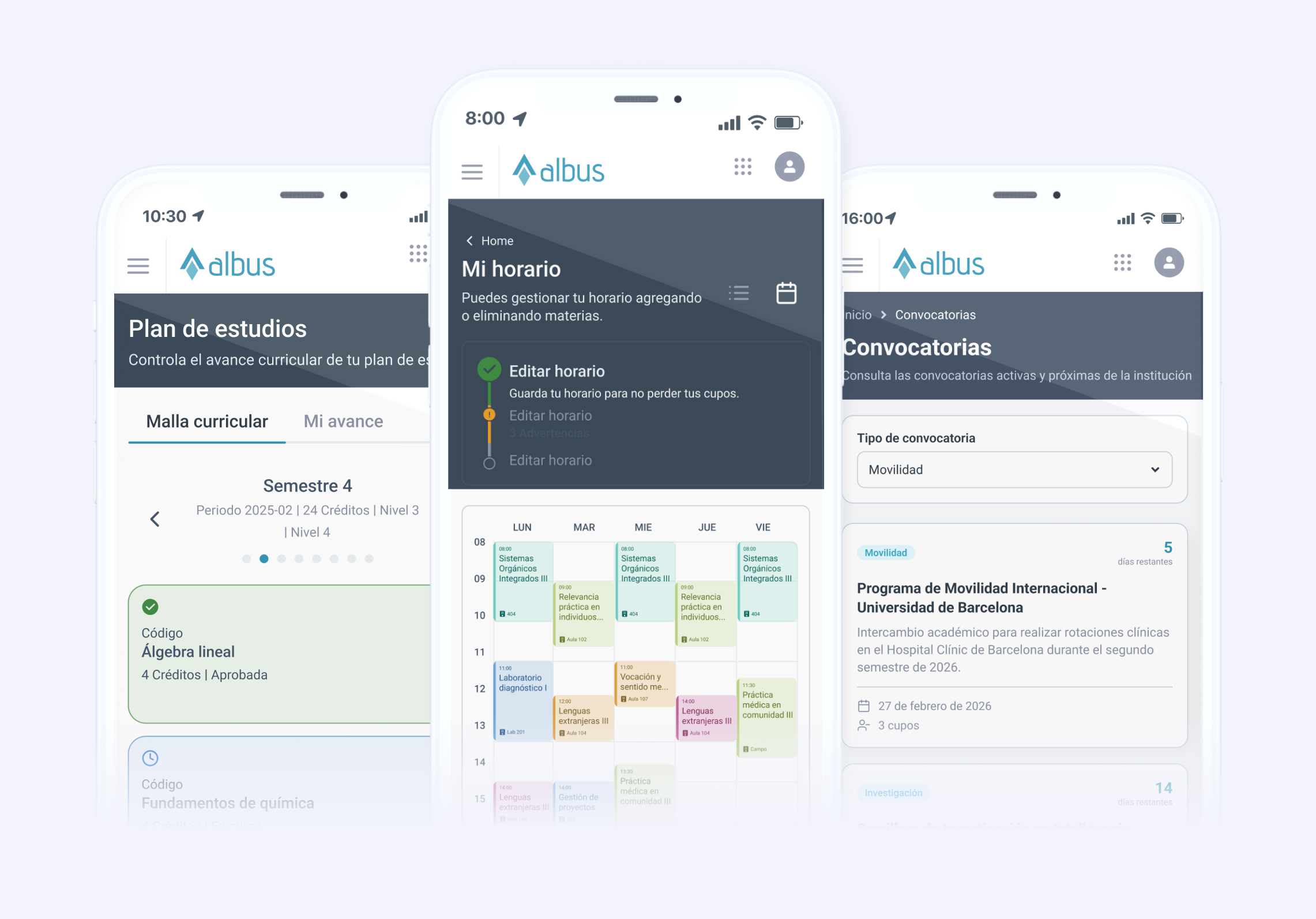
Albus is the student self-service portal of Foris Suite, designed to bring the student's university experience together in a single platform. It connects data and processes to offer a personalized, intelligent experience in which AI, agents, and recommendations support students along their academic pathway and in their decisions.
Albus is the Student Portal that brings micro- and meso-curricular academic progress, enrollment, finances, assessments, and other key processes of the university journey together in a single self-service space.
The new standard for the student experience
Students expect their university to offer a seamless, intuitive, and personalized digital experience, like the one they find on the platforms they use every day. They want to find information when they need it, receive personalized guidance, and have clarity about what comes next, without hunting for answers in different places.
Throughout their academic pathway, students constantly face new questions: How far along are they in their curriculum? Which courses should they take? When and how much do they have to pay? Which scholarships can they apply for? What documents do they need? It is no longer enough to offer them a place to handle each of these processes separately. They expect an experience that connects the information, lets them find and understand what they need effortlessly, and guides them on the best way to move forward.
Traditional academic systems already hold much of the information students need. The challenge, however, lies in how that data is connected and how it is used to create value. Information on enrollment, academic pathways, assessments, finances, and other processes is usually managed and presented separately, which limits the university's ability to cross-reference information, identify patterns, anticipate needs, and understand each student's full context.
For students, this means an experience where information is available but not always connected to their context or turned into specific guidance and personalized recommendations. They can check which courses they have taken, their results, or their payments, but the system rarely uses that information to suggest different course loads and study paths, show them how each option might affect the time it takes to complete their program, alert them to important pending items, anticipate possible academic holds, or help them decide what their next step should be.
Albus transforms this experience by connecting the data and processes that are already part of university operations and adding an intelligent layer that understands each student's context. Artificial intelligence, advanced analytics, agents, recommendations, predictions, and rules engines turn that information into an experience that understands context, anticipates needs, and guides student decisions at every point in their academic pathway.
These are some of the experiences the Student Portal brings together to support students throughout their university journey:
Academic progress, beyond courses and credits
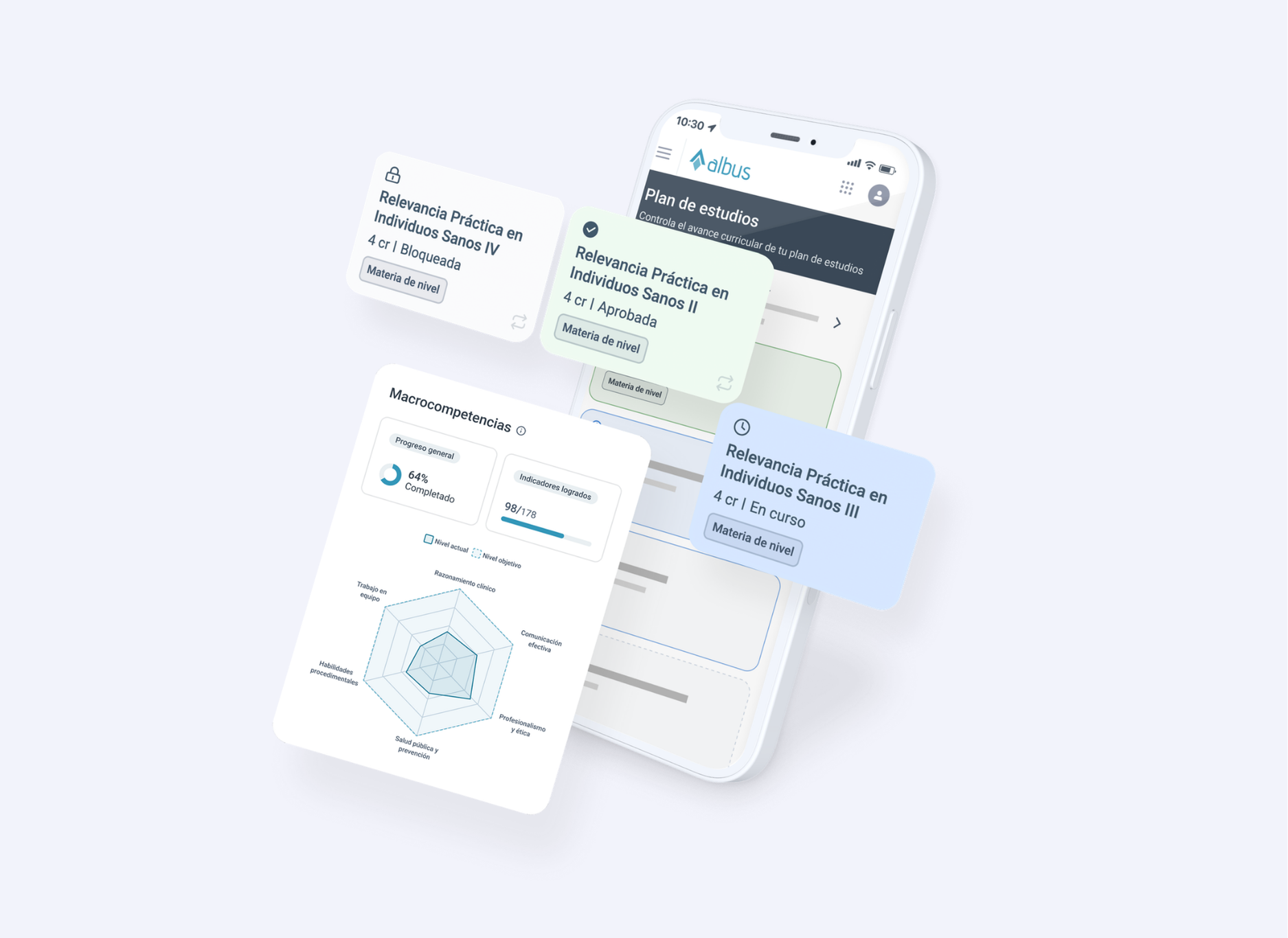
Students need to understand how far they have come, what they have achieved, and what they still need to reach their graduate profile. The Student Portal brings this information together in a single view:
- Micro-curricular progress shows semesters, courses, and credits, detailing which courses the student has already passed and which are still pending. Students can check their progress by academic term, to see the courses they have taken and those still pending, or by stage of the study plan, to understand how they are moving through their curricular pathway. The information includes required courses, program electives, and cross-program electives.
- Meso-curricular progress shows the competencies, learning outcomes, and performance indicators the student acquires over the course of their academic pathway, as well as those where they still need to make progress.
- The contribution matrix shows how each course contributes to developing the competencies in the program's graduate profile, and how progress in courses relates to that graduate profile.
- AI and configurable alerts support students throughout their academic pathway, recommending what to do at each point based on their progress and context, and helping them identify pending items, anticipate needs, and decide on their next step.
Course enrollment with an AI-generated schedule proposal
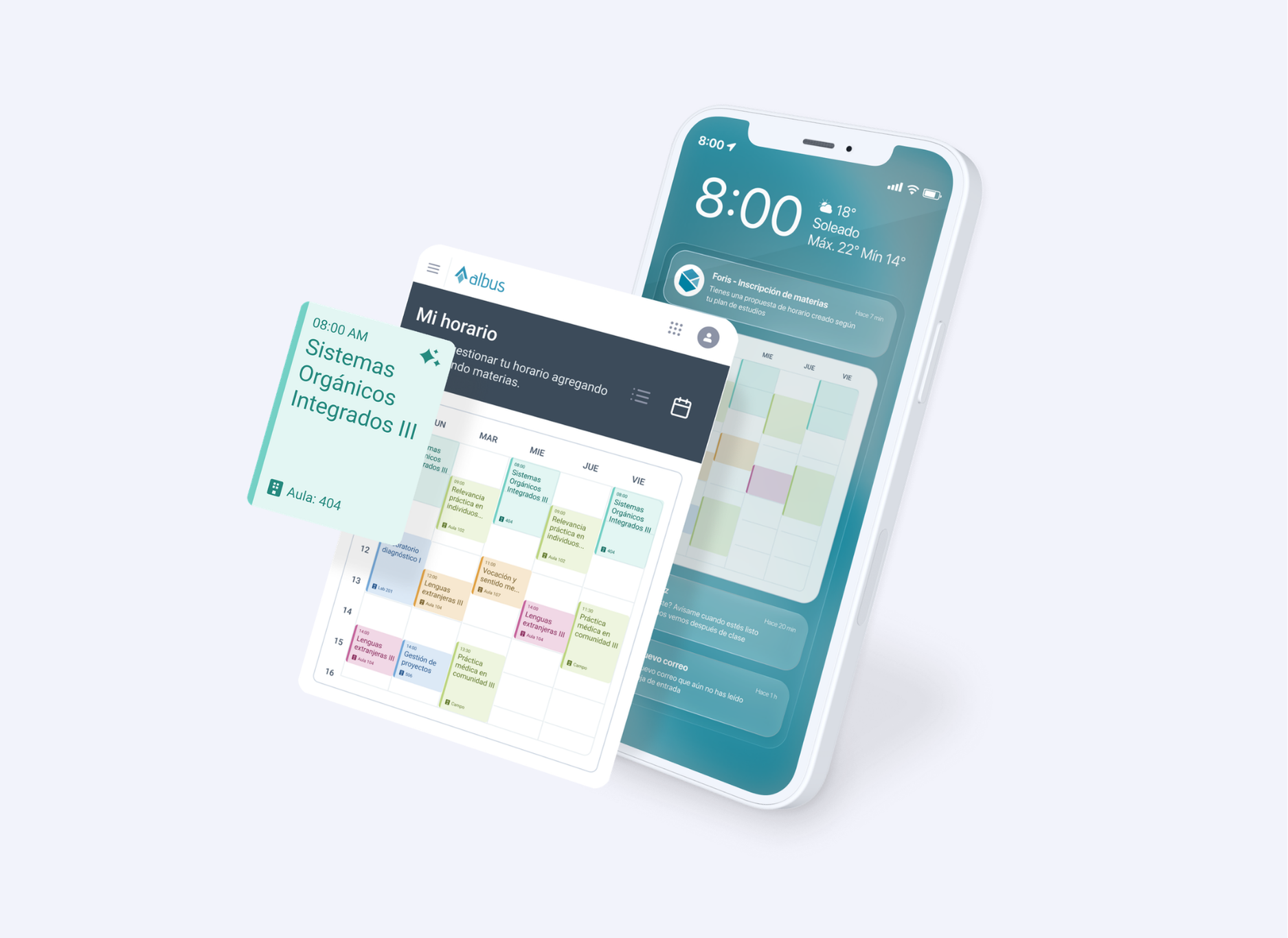
When students log in to the portal to enroll, they don't start from scratch: Albus's AI builds a tailored schedule proposal, taking into account the courses they need to take based on their curricular progress, the rules of their study plan, and their preferences. They can accept the entire proposal or change specific courses.
It also offers students schedule packages that simplify their choice by presenting combinations of courses that already meet academic and scheduling conditions. Instead of building their schedule course by course and manually checking that everything is compatible, they can choose from alternatives that are already set up for their academic pathway.
Throughout the process, Albus validates each of the student's decisions in real time. If a student exceeds the maximum number of credits or selects a course for which they don't yet meet a requirement, the system lets them know right away, so they no longer have to wait for a later review to find out that their enrollment needs to be corrected.
Before finalizing enrollment, students can pay directly from the portal using different payment methods. The result is a faster, more autonomous experience.
At institutions that use Albus for enrollment, the process takes 15 minutes on average, and students accept more than 70% of schedule proposals without making any changes.
Assessments with end-to-end traceability
Every assessment generates information that has to reach students in a timely manner and be on record in the system for the institution. The Student Portal centralizes this process and connects the upload, processing, and publication of assessment results, keeping them traceable until each term closes.
- Manual or bulk grade uploads, or uploads directly from the LMS.
- Automatic calculation of grades and closing statuses.
- Full traceability of every assessment process, from recording to closing.
In the end, students find the grade they need to check and can understand what it means for their academic pathway. From the Macro-competencies view, they can see how their assessments demonstrate the development of the competencies they are building and how these contribute to their graduate profile.
For the university, every assessment becomes connected information about learning and competency development, providing a more complete view of student progress.
Student finances in one place
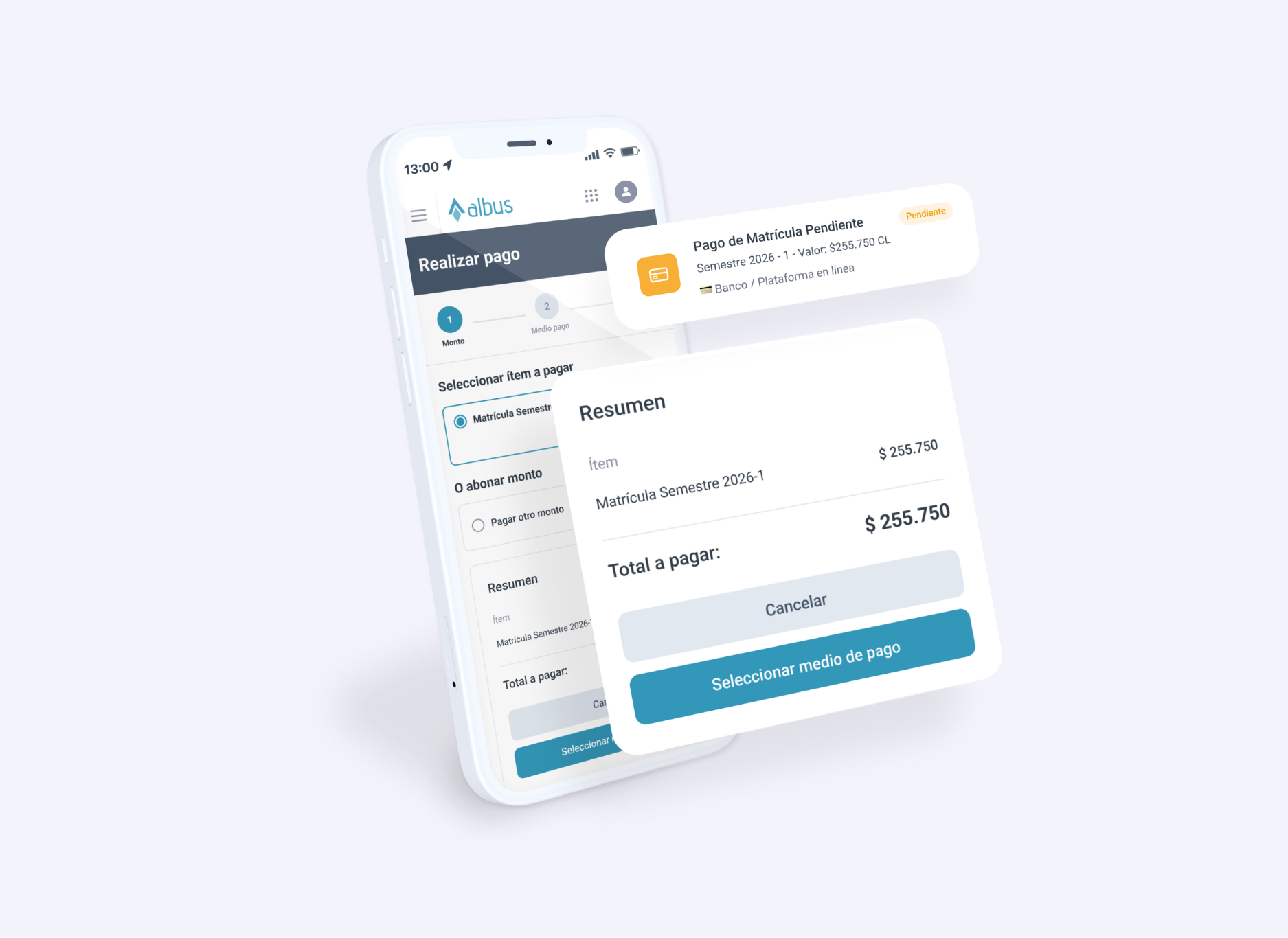
Students want clarity about their financial situation and to know which payments are pending. The Student Portal brings this information together in the same space where they manage their academic life, so they can check, track, and settle their payments whenever they need to.
- An up-to-date account statement, with financial information available in real time.
- Tracking of payments and due dates, with a clear breakdown of the items that make up each charge, the discounts or scholarships applied, and the outstanding balance.
- Viewing and downloading receipts, without relying on other channels to access them.
- Paying for services from the portal, completing the entire process in one place.
An integrated financial experience that gives students more autonomy and the university more agile management.
Financial aid within students' reach
Students can find, in a single space, the opportunities that can support their university journey and see which ones are available to them. The Student Portal connects this information with their financial and academic experience, making it easier to access scholarships, benefits, and support options when they may need them.
From the portal, students can check:
- Available scholarships and financial aid, with current opportunities and the options they are eligible for.
- The status of their requests, including pending and approved applications and their history.
- Accumulated financial benefits, with the total savings from scholarships and benefits received.
The portal brings financial aid closer to students, making it easier to access opportunities that make their university journey simpler and more accessible.
On top of this experience, other capabilities make day-to-day management simpler:
- Student profile: students find their institutional information and the communications relevant to their academic pathway in one place. The Student Portal connects this information with the interactions of the university's advisors and teams, so they can personalize support with more relevant interactions based on each student's needs and point in their studies.
- Enrollment registration and re-enrollment: students check up-to-date information on their active programs and manage their continuation in them, including choosing a delivery mode and paying, directly from the portal.
- Pathway plan: students simulate different routes to their degree and compare scenarios so they can weigh their options before deciding what to take. This way, they can understand how their decisions affect the entire path to graduation.
- Application periods: students explore open calls in different areas, such as academics, research, outreach, scholarships, and mobility, check their requirements, and apply directly from the portal.
- Certificates: students access official certificates and documents directly, with no in-person requests or external channels (e.g., grade, enrollment, student status, micro- and meso-curricular academic progress, and degree certificates, among others).
- Credentials and badges: students can see the credentials and recognitions the university offers, identify which ones they are close to earning, and discover which ones relate to their interests and academic pathway, receiving recommendations on new opportunities to certify their achievements, skills, and competencies.
One experience for their entire academic life
Albus offers a new way of interacting with university information: an experience in which data is no longer siloed and starts working together to support students, guide their decisions, and anticipate what they need. For the university, this means turning the information it already has into a real capacity to support students, with more autonomy for them and smarter management of their academic pathway.
The Student Portal is no longer just a place to look things up: it becomes a strategic part of the university experience.
That support connects with the rest of university operations. Albus receives the course offerings and schedules from Darwin, and the monitoring signals from Stella reach the same student profile. When these pieces work together, the student's academic pathway operates as a single system, from their first registration to graduation day.
Talk to a specialist to learn how to bring the Albus Student Portal experience to your university. Book a demo!
Frequently asked questions
What is the Albus Student Portal?
It is Foris Suite's student self-service space, where students check and manage their academic progress, enrollment, finances, assessments, and documents in one place, all year round.
Can students see their progress by competency as well as by course?
Yes. Albus offers one view of progress by course and another by competency, linked through the contribution matrix, which maps each course to the competencies it builds toward the graduate profile.
What financial matters can students manage in Albus?
Students check their account statement in real time, track payments and due dates, download receipts, and pay for institutional services, all from the same portal where they manage their academic life.
How does Albus help students plan their path to graduation?
Through the pathway plan, which lets students simulate different routes to graduation and see how each enrollment decision affects the path they still have ahead.
Is Albus support available at all times?
Yes. Information on progress, finances, assessments, and documents remains available throughout the academic year, without depending on a specific application period being open.