Flexible AI-powered course schedules
Universidad Javeriana Cali's bet on transforming its academic planning

In an increasingly dynamic educational environment, where academic flexibility is key to meeting students' expectations and individual pathways, Pontificia Universidad Javeriana's Cali campus took a decisive step in its digital transformation. With more than 8,500 students, it set out to solve one of its biggest operational challenges: offering course schedules that efficiently met diverse and changing demand. To get there, it turned to Darwin and its artificial intelligence as a strategic ally in modernizing its academic planning process.
Curricular flexibility as an institutional purpose
The university's purpose is to anticipate and respond to its students' changing needs through a flexible curriculum, made up of disciplinary courses, institutional courses, concentrations, and complementary options from other programs. This commitment goes far beyond adopting a more dynamic academic model: it is also a strategic evolution that brings in advanced technology to optimize operations while raising the quality of the educational experience.
The complexity of this approach lies in fitting academic programs to each student's individual pathway, at a time when learning is becoming ever more personalized and professional skills are constantly changing.
The university understood that achieving this vision required smart, flexible tools that could handle that complexity effectively while also solving the day-to-day challenges of academic operations.
The challenge: beyond seats
Before implementing Darwin, the university faced a reality familiar to many higher education institutions in Latin America:
-
Student dissatisfaction caused by unmet demand during course enrollment, since many students could not find seats at times that fit their needs and academic pathways.
-
Old and new curricula running side by side, along with students at different points in their curriculum, which made it hard to design common schedules that worked for every profile. Although students could enroll in up to 18 academic credits, many struggled to find combinations of courses with compatible schedules, which held back their academic progress.
-
A manual space assignment process with a heavy operational workload for the academic team. Despite the effort, assignments did not always reflect the actual conditions of each course, especially given the limited number of classrooms available.
All of this made enrollment stressful for both students and the academic team, affecting not only operations but the educational experience itself.
Betting on artificial intelligence
In 2019, Universidad Javeriana began exploring artificial intelligence solutions to transform its academic planning and improve its students' enrollment experience. After a competitive process that compared different tools on the market, it chose Darwin, our smart academic planning solution, implemented in partnership with Implemental System, for its broad functional scope and competitive pricing.
The expectations were clear:
-
Generate "what-if" simulation scenarios that would let the team vary parameters and input data to anticipate and solve assignment problems before they arose.
-
Improve the quality and management of the information used in academic planning, to obtain key indicators and strengthen decision-making.
-
Configure specific rules tailored to its academic model, for more accurate enrollment aligned with its educational context.
-
Improve demand estimates for cross-program courses, to avoid creating mini-sections (sections with fewer than 10 students) caused by schedules that only suited one specific program.
-
Optimize the section offering without limiting students' schedule options.
A project with real impact
The project started on March 21, 2023, and in just 8 months it put the first AI-optimized schedules into production. Starting November 14, 2023, students could experience Darwin's benefits firsthand.
Project highlights:
|Start | March 21, 2023| |Go-live | November 14, 2023| | Total duration | 8 months|
The results were compelling:
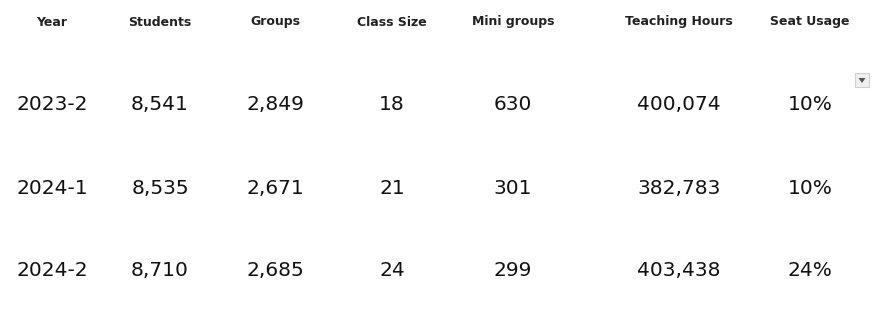
The chart below shows the main global academic indicators for the 2023-2, 2024-1, and 2024-2 terms. This data shows Darwin's impact on academic planning at Universidad Javeriana Cali.
Sections
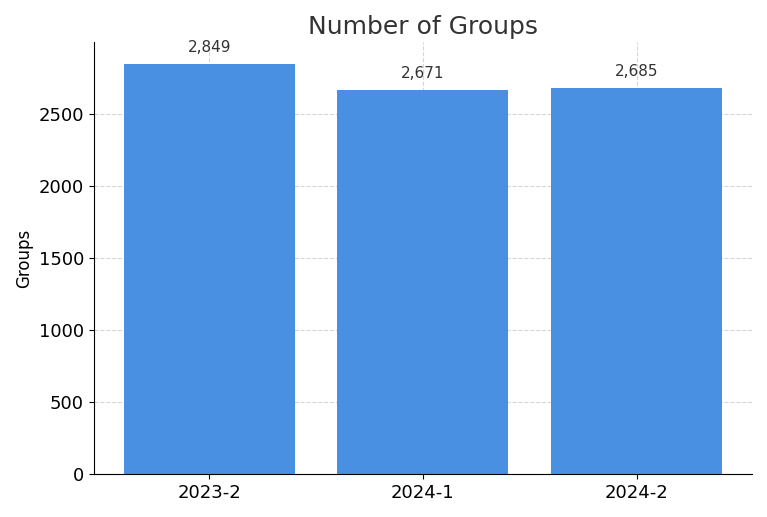
The number of sections fell by 6.2% in 2024-1 and by 5.8% in 2024-2 compared with 2023-2. This reduction came despite growing enrollment.
Compaction
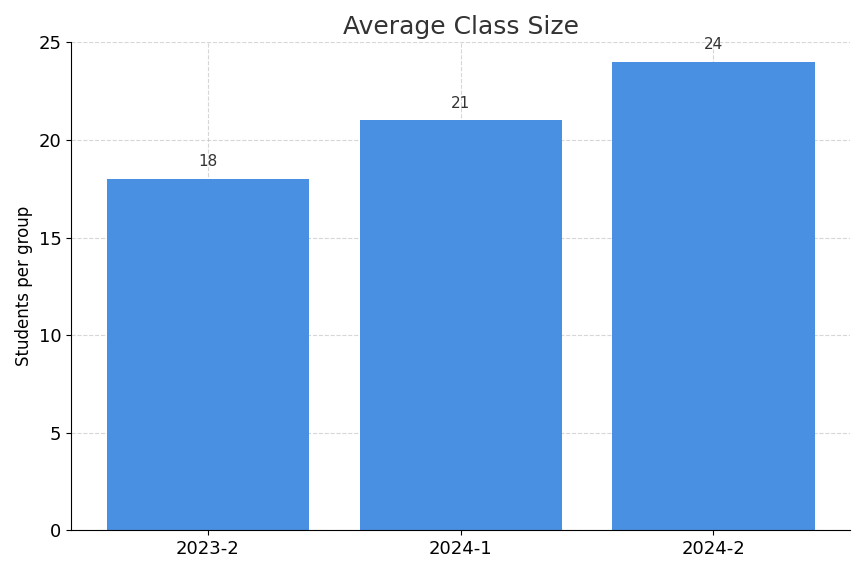
Compaction, measured by average class section size, rose by 33%, from 18 to 24 students per section between the 2023-2 and 2024-2 terms. Whenever infrastructure allows it, this increase is key to optimizing how many sections are opened.
Thanks to the higher compaction achieved in the 2024-1 term, the university has been able to serve a larger student body with fewer sections than in the previous term.
Mini-sections
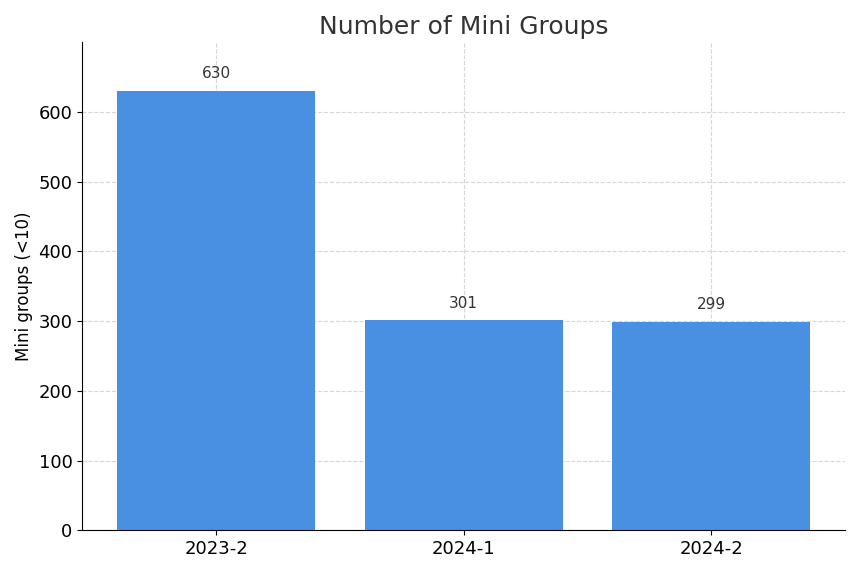
The number of mini-sections fell by 52.5%, from 630 to 299 between 2023-2 and 2024-2. This drop correlates directly with the increase in average section size (compaction).
"When academic regulations and infrastructure allow it, moving students from mini-sections into larger sections becomes a key action for making course scheduling more efficient."
Student satisfaction
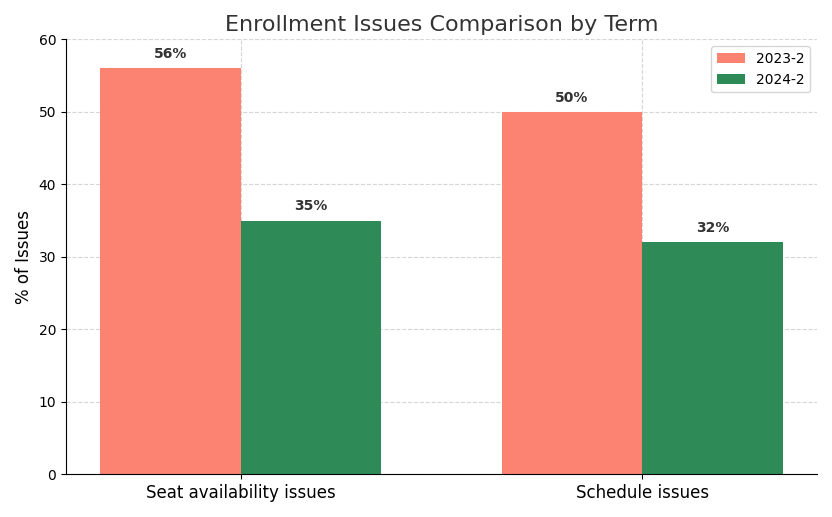
Between the 2023-2 and 2024-2 terms, reports of seat availability problems dropped from 56% to 35%, and schedule conflicts went from 50% to 32%. This steady decline reflects more efficient academic planning, with better conditions and closer alignment with students' needs, strengthening satisfaction and positive perceptions of the enrollment process.
4 benefits of Darwin at Universidad Javeriana Cali
Since March 2023, Universidad Javeriana Cali has seen significant improvements in both its academic operations and its students' satisfaction. The main benefits of implementing Darwin include:
- Optimized course schedules: courses fit together better, minimizing schedule conflicts and making it easier to access required courses, so students' academic progress is not delayed.
- Higher student satisfaction: a more balanced and flexible schedule offering lets students manage their credits better and enroll in courses that match their curricular progress.
- Demand forecasting and estimation: academic areas work together, and the university can also project budget scenarios based on more accurate demand estimates.
4. Multiple scenarios: made it easier to evaluate different planning options and choose the scenario that best fit institutional goals.
With Darwin, Universidad Javeriana Cali not only solved an operational challenge but also laid the groundwork for more agile, strategic academic management focused on its students' success and experience: a decisive step toward the challenges facing the future of higher education.